
Building Resilient, Scalable, and Customer-Centric Financial Platforms
Executive Summary
Digital-first and mobile-centric financial services, commonly referred to as fintech, are no longer a novelty but a fundamental requirement for banking and financial institutions seeking to remain competitive. As fintech innovations continue to reshape banking and financial services, institutions must adapt by modernizing their software infrastructure and implementing agile methodologies.
It provides insights into how financial institutions can leverage strategic digital transformation for long-term success. It also highlights the benefits of partnering
with a trusted technology provider to drive innovation, optimize operations, and build scalable, future-ready fintech applications.
The Shift to Digital-First Financial Services
The global fintech industry is experiencing exponential growth, fueled by the
increasing demand for digital and mobile-first financial services that offer
greater convenience, accessibility, and personalization than traditional banking
services. According to McKinsey, fintech revenues are expected to grow almost
three times faster than traditional banking between 2023 and 2028. Consumers now
expect seamless, real-time access to banking, payments, lending, and investment
platforms.
- Mobile banking – Smartphones have transformed how customers interact with their banks. Mobile banking apps have become essential for basic transactions, bill payments, and account managment.
- Digital payments – Digital payment solutions, such as mobile wallets and online payment gateways, rapidly replace traditional cash and card transactions. The COVID-19 pandemic accelerated the adoption of contactless payments, further driving the growth of digital payment
- Online lending and investing – Fintech companies also disrupt traditional lending and investment services by offering online platforms that provide faster and more accessible financing options. Online lending platforms use alternative data sources and algorithms to assess creditworthiness, expanding access to credit for underserved populations. Robo-advisors and online trading platforms are democratizing investment services, making them more accessible to retail investors.
Rapid Growth in the Philippine Digital Banking Sector
The fintech industry in the Philippines is experiencing significant growth and
innovation. As of 2022, there were 289 operating fintech firms in the country. The
lending sector accounted for the highest share of fintech companies at 27%, with
popular digital financing applications like Cashalo, Digido, and Pesoloan.
Digital payments are a key focus, with the total transaction value in this market
projected to reach $107.42 billion by 2025 and grow at a CAGR (Compound
Annual Growth Rate) of 28.41% to $292.10 billion by 2029. GCash, the country’s
first fintech unicorn, leads in mobile wallet services, followed by Maya, which also
achieved unicorn status.
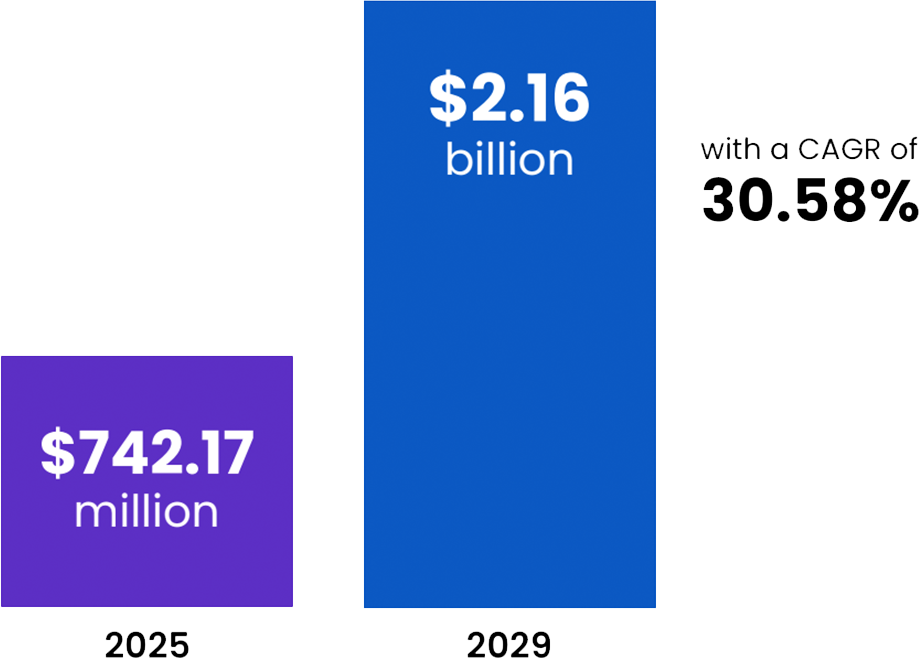
The digital banking sector in the Philippines is also expanding rapidly. Net interest
income is expected to reach $742.17 million by 2025 and grow at a CAGR of 30.58%
to $2.16 billion by 2029. The government is promoting digital payment adoption,
and the COVID-19 pandemic has accelerated the shift towards online banking and
e-commerce transactions.
PH digital banking’s expected net interest income
Continue reading by downloading the document