 98.6% faster
 generation of large-scale hazard maps and underlying risk factors
 99.9% uptime
 while managing up to tens of thousands of images processed
 10/10 score given to the Stratpoint team
 for exceptional machine learning expertise, agility, autonomy, and communication skills
Summary
A top Silicon Valley enterprise collaborated with Stratpoint to transition high-resolution research prototypes into secure, scalable enterprise tools. What began as a specialized AI Tech Reconnaissance mission to test early-stage technologies evolved into a comprehensive agentic transformation. By providing the engineering body—DevOps and data science—for the AI brain, Stratpoint enabled the client’s AI prediction engine to move from experimental research to full-scale production, capable of planetary-scale processing.
Challenges
The Silicon Valley team, specializing in climate tech products, needed to transition bleeding-edge proof-of-concept models into production-ready enterprise tools. The client required a dedicated team capable of autonomous, high-tier AI and DevOps engineering to ensure their AI models were secure, scalable, cost-optimized, and production-ready for the client’s global partners.
Solutions
Stratpoint initially assembled a specialized three-person AI Tech Reconnaissance team to serve as an autonomous extension of the Silicon Valley team. As the project matured, Stratpoint’s offshore team expanded into a full-time team of 11 specialists who are experts in machine learning R&D and prototyping, experimentation, agentic AI, DevOps workflows, and technical project management. This team served as the necessary engineering body for agentic readiness, managing end-to-end infrastructure for climate hazard mapping and aerial image geolocalization.
Core Initiatives & Engineering Milestones
- Predictive modeling for site suitability: Developed AI pipelines that manage massive multimodal datasets to assess and qualify potential solar power station locations using tools for planetary-scale geospatial analysis, leveraging relevant public datasets and satellite imagery.
- Geospatial localization for disaster response: Investigated computer vision methods to geolocate images using aerial imagery with low metadata, and tackled extremely high technical constraints.
The Well-Architected Framework Review (WAFR)
Stratpoint introduced a structured DevOps framework to assess product security, reliability, and cost optimization, ensuring research models could withstand real-world enterprise demands.
- Data privacy & security: The team upheld a high standard in cloud security, attaining a 4/5 maturity rating in the Security Pillar of the Google Cloud WAFr, enabled by automated security guardrails and proactive monitoring of sensitive geospatial data.
- Oversight mechanisms: DevOps engineers established monitoring systems to track fulfillment and enable alerts, ensuring strict adherence to standards and the WAFr pillars: operational excellence, security, privacy, and compliance, reliability, cost optimization, performance optimization, and sustainability.
- Ethical controls: To ensure transparent and responsible AI-driven assessments, the team utilized explainability subcomponents to detail specific risk factors.
Defining Agentic Transformation through Autonomous Engineering
Stratpoint proved agentic transformation is a reality by conducting breakthrough experiments using Gemini to create autonomous agents capable of AI engineering tasks, including:
- Autonomous research: Conducting literature reviews and identifying model features.
- Self-debugging code: Writing and self-correcting Python code to extract planetary datasets.
- Geo-reasoning AI copilot: Developed a tool allowing users to “talk” to the prediction engine in natural language to understand high-risk regions.
Transformative Business Impact
Stratpoint’s team demonstrated exceptional machine learning expertise, agility, autonomy, and communication skills, all rated 10/10 by the Silicon Valley team. The AI artifacts and insights delivered by Stratpoint enabled the client to focus on their core strategic tasks with minimal disruption, ensuring that only the most viable technologies were pursued.
By productionizing these models, Stratpoint enabled the client to save global partners millions of dollars through highly granular catastrophe modeling.
The AI prediction engine empowers global partners with absolute risk scoring, providing the foresight to predict natural disaster risks years in advance. This supports diverse geospatial use cases including property damage assessment, natural energy sourcing, and energy conservation.
The AI prediction engine currently generates risk factors and scoring across North America. Stratpoint has laid the architectural foundation for transitioning the engine to a unified global model, enabling a shift from regional analysis to borderless planetary coverage.
Key Value Drivers
- Local presence and direct communication: Easy alignment with the company without language barriers or multiple team handoffs.
- Product readiness: Stratpoint had a working chatbot solution, which significantly reduced development time.
- Guided design thinking: Stratpoint helped organize and refine the company’s initial unstructured FAQ list into an effective knowledge base, ensuring higher AI accuracy and a more successful launch.
The company now maintains continuous, multi-platform customer engagement, meeting customers where they are, whether on social media or in-app, while building stronger, direct relationships for the long term.
Customer Experience
|
“Stratpoint is a domain expert in machine learning and AI, but is also very proactive, flexible, and efficient in their work. Their communication with us is top-notch, making them a real breeze to work with."
Chief of Staff/Senior Program Manager
|
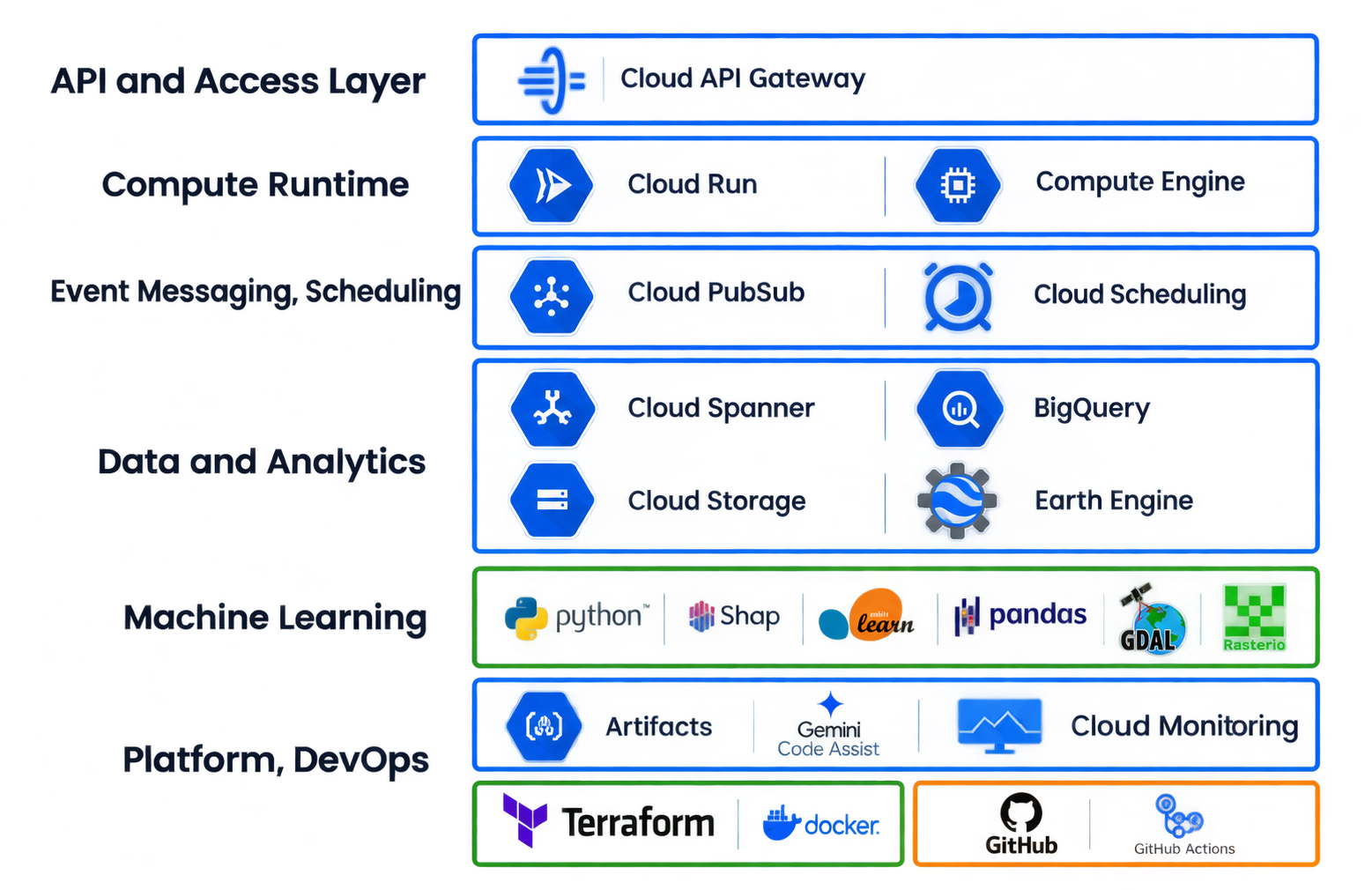
Technologies Used